Same-day Emergency Appointments Available!

By Riverside Dental | July 23, 2026
That Twinge When You Bite Down Wasn’t Nothing
You take a bite of your sandwich, and there it is a sharp little jolt where there shouldn’t be one. Maybe it fades in a second. Maybe it lingers into the afternoon. Either way, a part of you already knows this isn’t going to fix itself, and now you’re wondering whether you’re looking at a simple filling or something bigger, like a dental crown.
That question – crown vs filling, is one Tucson patients bring to Riverside Dental every week, usually holding an ice pack and a mental list of everything they have planned this month that a dental visit wasn’t supposed to interrupt.
The Warning Signs Your Tooth Sends First
Before a tooth reaches the point of real trouble, it usually tries to tell you. The signs are easy to brush off because they don’t scream for attention, until suddenly they do.
- Sharp pain when you bite down on that specific tooth
- Sensitivity to hot or cold that lingers longer than a few seconds
- A visible chip, crack, or dark spot you can see or feel with your tongue
- A rough edge that keeps catching on your cheek or floss
- An old filling that feels loose or has a gap around the edge
Wondering whether your symptoms point toward a crown rather than a filling? Our guide, “Do You Need a Dental Crown? Warning Signs Tucson Dentists Always Look For,” explains the signs dentists look for when deciding if a tooth needs additional protection.
Why the Crown vs. Filling Decision Matters More Than You Think
This isn’t just a question of which procedure costs less or takes less time. Choosing the right restoration protects the long-term structure of your tooth and your smile’s appearance, comfort, and function for years to come.
What’s Really Happening Inside Your Tooth
Underneath the visible surface, your tooth is a living structure. Once tooth decay reaches past the outer enamel, it starts working on the softer dentin layer underneath, moving faster than most people expect. A small filling can stop decay early. But once too much of the tooth’s structure is compromised, a filling has nothing solid left to bond to that’s when a crown becomes the tooth’s best chance at staying functional instead of eventually needing extraction.
| Did You Know? A tooth can lose up to half its structural strength once a cavity reaches the dentin layer long before you’d feel constant pain. That’s why what looks minor on the surface can already need more than a simple filling underneath. |
What Happens If You Choose the Wrong Restoration Or Wait Too Long
The Hidden Cost of Waiting
Putting off a decision doesn’t pause the problem it just changes your options later. A cavity that needed a small filling this month can need a crown by next season. Left even longer, it can progress toward a root canal or an extraction, especially once bacteria reach the tooth’s nerve.
There’s also a bite alignment factor patients don’t always think about. A cracked or unevenly restored tooth can shift how you chew, putting extra strain on neighboring teeth and, over time, affecting your jaw comfort and gum health around the area.
Crown vs. Filling: How Riverside Dental Makes the Call
How Dr. Grant Hooper Decides Between the Two
A dental crown vs. dental filling decision at Riverside Dental begins with a thorough examination by Dr. Grant Hooper. After evaluating the tooth and, when needed, reviewing digital X-rays, he determines the extent of the damage beneath the enamel. His priority is always to preserve as much healthy natural tooth structure as possible recommending a filling when the tooth has enough strength to support one, or a crown when additional protection is needed to restore function and prevent future damage.
Whether the solution is a filling or a crown, the goal remains the same: stop decay, restore your bite, and protect your tooth for the long term. The right treatment depends on the amount of healthy tooth structure remaining and what will provide the most durable outcome for your smile.
⭐⭐⭐⭐⭐ Martha Enriquez
I went to Riverside Dental. Michelle took care of me. She was awesome. We had a great conversation too. The new dentist there is also very friendly and very professional. I miss Dr Kirkland but glad to have the new dentist. Thank you.
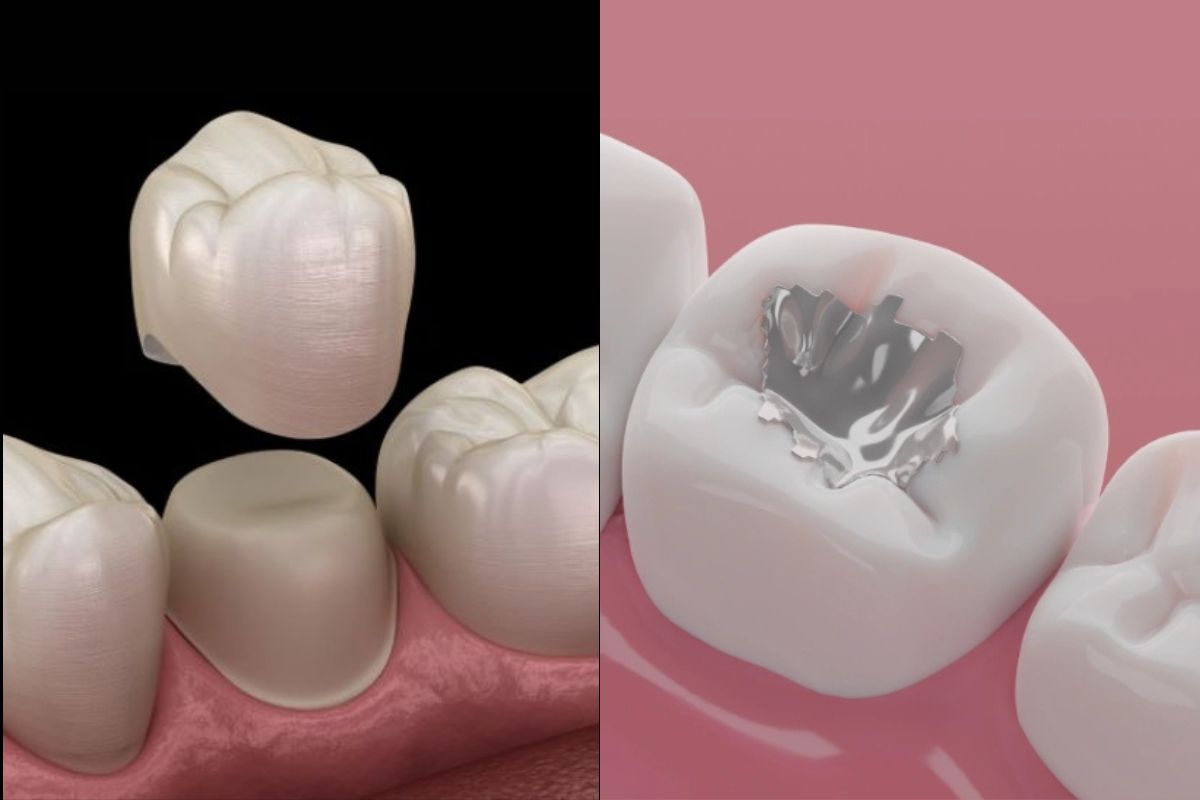
| Factor | Dental Filling | Dental Crown |
| Best For | Small to moderate cavities, minor chips | Large cavities, cracks, root canal teeth, worn or broken teeth |
| Tooth Structure Removed | Minimal — only decayed area | More — tooth is reshaped to hold the crown |
| Material Options | Composite resin, amalgam | Porcelain, zirconia, porcelain-fused-to-metal |
| Typical Visits | Usually 1 visit | Usually 2 visits (or 1 with same-day crown technology) |
| Durability | 5–10 years on average | 10–15+ years with good care |
| Appearance | Tooth-colored, blends with enamel | Fully restores natural tooth shape and shade |
If your treatment plan includes a dental crown, you may also be wondering which type is right for your situation. Our guide, “Implant Crown vs Traditional Crown: Which Is Right For You?“, explains the differences between crowns placed over natural teeth and those attached to dental implants, helping you understand when each option is recommended.
Restorative Dentistry Tucson Families Have Relied On
Meet Dr. Grant Hooper

Dr. Grant Hooper leads the team at Riverside Dental, PC, providing comprehensive general and restorative dentistry for patients throughout Tucson. He believes every treatment recommendation should be based on preserving as much healthy natural tooth structure as possible while restoring long-term comfort, function, and confidence.
Whether a tooth needs a simple filling or the added protection of a dental crown, Dr. Hooper takes the time to perform a thorough evaluation, explain every option clearly, and recommend the treatment that best supports your long-term oral health. His patient-first approach and commitment to honest, personalized care have made Riverside Dental a trusted choice for restorative dentistry in the Tucson community.
Schedule a consultation with Dr. Grant Hooper to determine whether a filling or crown is the right solution for your smile.
⭐⭐⭐⭐⭐ David Cruz
Doctor Hopper was wonderful.The whole staff was great, simple process.No pain whatsoever
Not Sure Which One Your Tooth Needs?
A quick exam at Riverside Dental can tell you whether you’re looking at a simple filling or a longer-term crown — before the decision gets made for you. Call (520) 299-4470 to schedule your visit!
How to Protect Your Tooth Either Way
Whether you end up with a filling or a crown, a few habits make a real difference in how long your restoration lasts:
- Stay consistent with oral hygiene — Brush twice daily with fluoride toothpaste and floss every night to protect the margins around any restoration.
- Pay attention to changes in sensitivity or bite — small changes can signal that a restoration needs attention before it becomes a bigger issue.
- Don’t skip your six-month checkups — catching wear or small cracks early keeps a filling from turning into a crown, and a crown from turning into something more.
- Ask about a nightguard if you grind your teeth — a custom nightguard can prevent cracked teeth and extend the life of both crowns and fillings.
- Watch out for hard foods and bad habits — avoid chewing ice, hard candy, or using your teeth as tools — pressure like that is a common cause of cracked teeth and failed fillings.
| Protect Your Smile Before the Damage Spreads Riverside Dental, PC has helped Tucson patients make confident, informed choices about their restorative care for years. Let’s find out exactly what your tooth needs and take care of it before it becomes a bigger problem. Call (520) 299-4470 or request an appointment online today! |
Frequently Asked Questions
1. How do I know if I need a crown or a filling?
It usually comes down to how much healthy tooth structure is left. If the decay or damage is small and the walls of the tooth are still strong, a filling is often enough. If a large portion of the tooth is cracked, weakened, or already broken down, a crown provides the support a filling cannot.
2. Can a filling fall out and turn into a bigger problem?
Yes. Fillings naturally wear down over time, especially on teeth that handle heavy chewing. If a filling becomes loose or falls out and isn’t replaced, decay can spread underneath it, potentially leading to the need for a crown or even a root canal.
3. Is getting a dental crown painful?
Most patients find the process similar to getting a filling. Your dentist will numb the area before treatment, so you should not feel pain during the procedure. Mild sensitivity for a day or two afterward is common and usually resolves quickly.
4. How long does a dental crown really last?
With good oral hygiene and regular dental checkups, a well-made dental crown can last 10 to 15 years or longer. Habits like teeth grinding, chewing hard objects, or skipping routine dental visits may reduce its lifespan.
5. Will my insurance cover a crown or filling?
Many dental insurance plans cover a portion of both fillings and crowns when they are medically necessary. Coverage varies by provider and policy, so it’s best to have your dental office verify your benefits before treatment begins.
6. What happens if I ignore a cracked tooth?
A cracked tooth rarely heals on its own. Everyday chewing can cause the crack to spread deeper into the tooth or below the gumline, increasing the risk of infection and making treatment more complex.
7. Can a filling be used instead of a crown to save money?
Sometimes, but only if enough healthy tooth structure remains. Choosing a filling when a crown is actually needed may lead to the restoration failing sooner, resulting in additional treatment and higher costs later.
8. How soon should I schedule an appointment if my tooth hurts?
Tooth pain is often a sign that a dental problem is already progressing. Scheduling an evaluation as soon as symptoms begin gives your dentist the best chance to treat the issue before it requires more extensive care.